

Ever stared at a product listing that says “8 inches” and had absolutely no idea what that means in real life? You’re not alone. Numbers on a screen don’t mean much until you connect them to something you can actually picture. That’s exactly what this guide does.
By the end of this article, you’ll know how long 8 inches actually is, what it looks like next to objects you already own, and how to measure it even if you can’t find a tape measure anywhere in the house. Let’s get into it.
8 Inches at a Glance
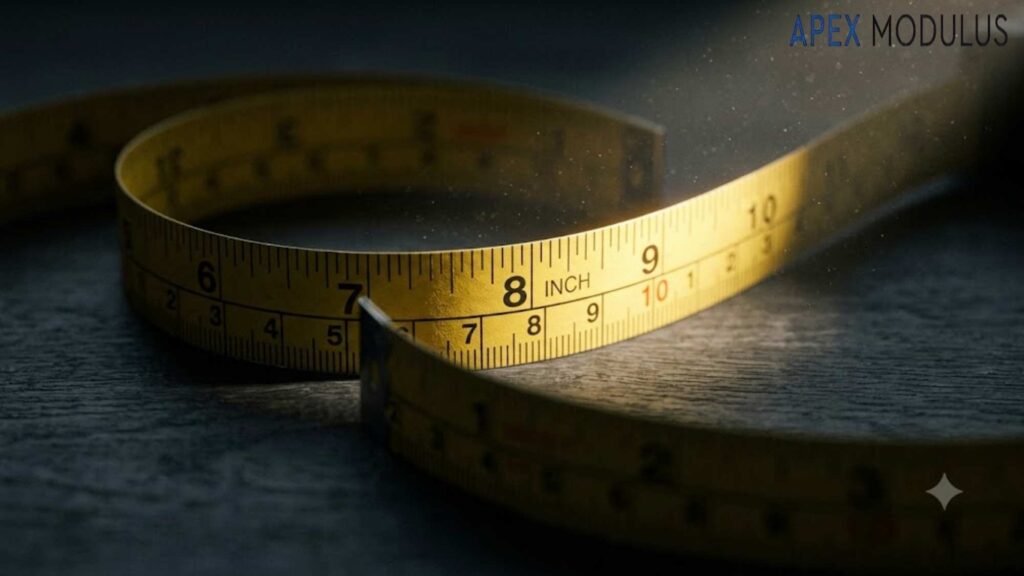
Here’s the short answer, because sometimes you just need the number and you need it fast:
8 inches = 20.32 cm = 203.2 mm = 0.67 feet = 0.22 yards
If you want one quick visual anchor before we go further: 8 inches is roughly the length of a dollar bill and a half, laid end to end. It’s also just a hair longer than the width of a standard sheet of printer paper. Keep that image in your head. We’ll build on it.
Eight inches sits in a strange middle zone. It’s too long to call “small” and too short to call “long.” That in-between quality is exactly why it shows up so often in everyday objects — kitchen tools, gadgets, stationery, even parts of your own hand. Once you start noticing it, you’ll see it everywhere.
Find out, How Big Is 20 cm? 15 Everyday Comparisons
8 Inches Converted to Other Units
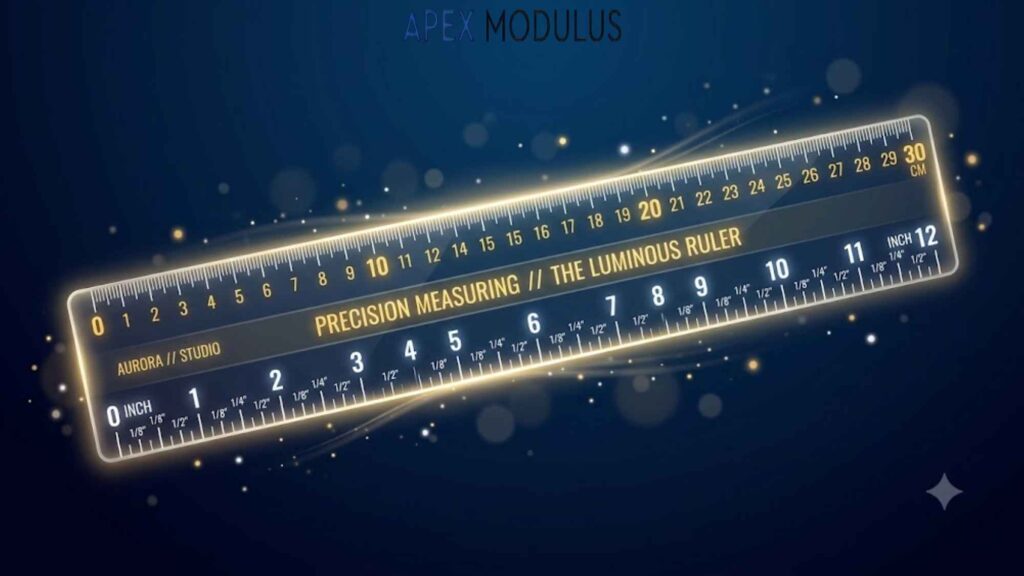
Not everyone thinks in inches, and honestly, even people who grew up with the imperial system sometimes need the metric version for a recipe, a shipping label, or a school project. Here’s a full conversion table so you never have to do the math yourself.
| Unit | Value |
|---|---|
| Inches | 8 in |
| Centimeters | 20.32 cm |
| Millimeters | 203.2 mm |
| Feet | 0.667 ft |
| Yards | 0.222 yd |
| Meters | 0.2032 m |
A quick note on precision: a lot of sites round 8 inches down to 20 cm and call it a day. That’s close enough for casual conversation, but it’s not accurate. If you’re sewing, building something, or shipping a package with tight size restrictions, that missing 0.32 cm can actually matter. Stick with 20.32 cm when precision counts.
What 8 Inches Feels Like on Your Own Body
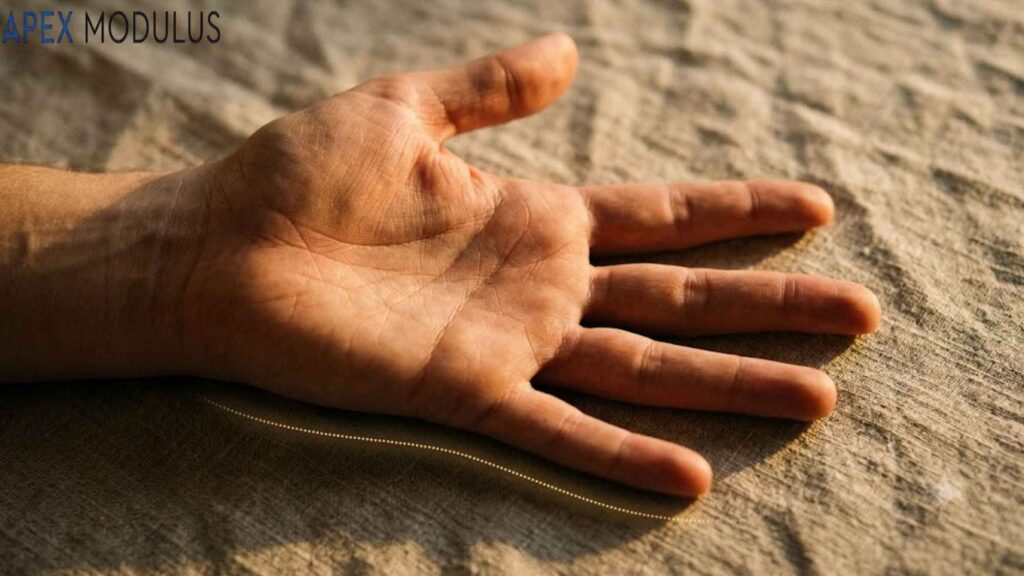
Here’s something most measurement guides skip entirely, and it’s honestly the most useful part of this whole article: you’re carrying an approximate ruler around with you all the time. Your own body.
Discover, How Long Is 5 Inches? 15 Everyday Objects
Average Adult Hand Span
Stretch your hand out flat, thumb tip to pinky tip. For most adults, that hand span lands somewhere between 7 and 9 inches, with 8 inches sitting right around the average for a typical adult hand.
This is one of the oldest tricks in the book for estimating length without any tools at all, and it’s the same principle tailors, carpenters, and cooks have used for centuries before tape measures were sitting in every kitchen drawer.
A word of caution, though: hand size varies a lot from person to person. Someone with smaller hands might measure closer to 7 inches thumb-to-pinky, while someone with larger hands could stretch past 9. Use this as a rough visual estimate, not a precise tool. If you need exact numbers, measure your own hand span once with a real ruler, then you’ll have a personal reference you can trust for life.
Forearm Comparison
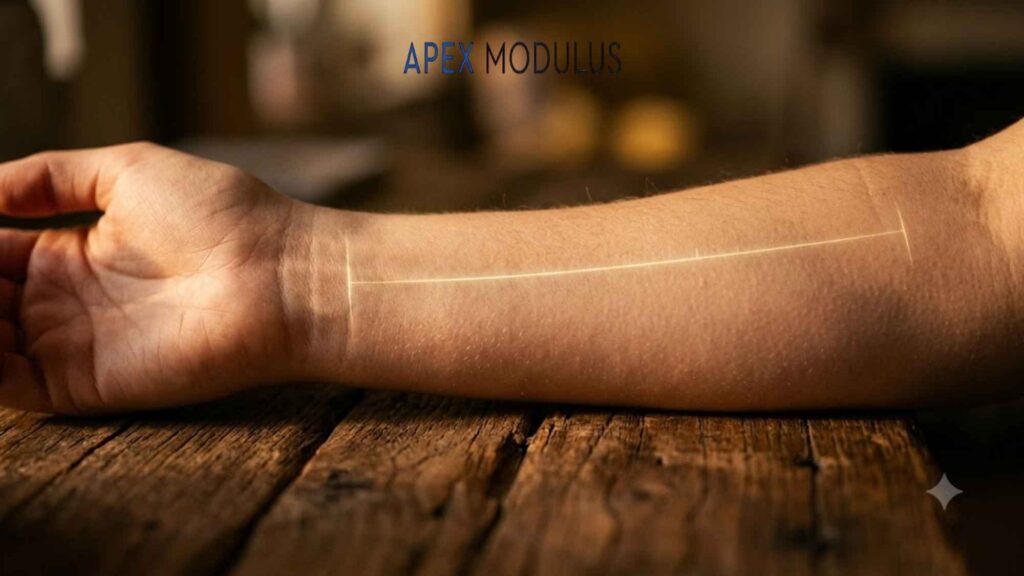
Measure from your wrist to about the midpoint of your forearm. For most adults, that distance lands somewhere close to 8 inches. It’s not as commonly cited as the hand span trick, but it’s a solid backup, especially useful when your hands are full or covered in flour mid-recipe.
Check out, Coke Can Dimensions: The Complete Size Guide
Two Dollar Bills, End to End
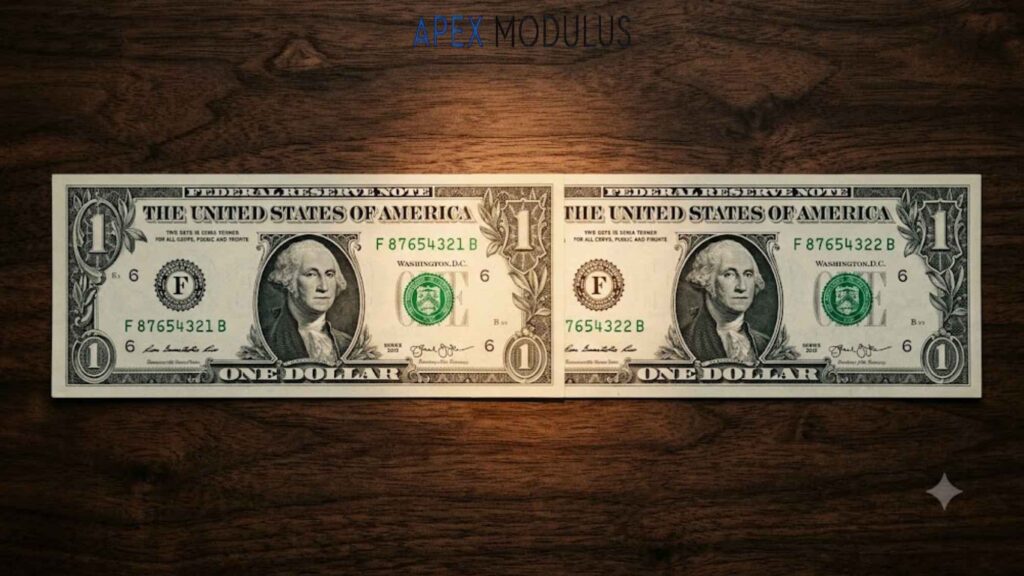
A standard U.S. dollar bill measures 6.14 inches long. Lay one down, then add roughly two-thirds of a second one, and you’re at 8 inches. It’s not a perfect quick measurement, but if you’ve got a couple of bills in your wallet and nothing else nearby, it gets you impressively close.
Everyday Objects That Are Exactly (or Very Close to) 8 Inches
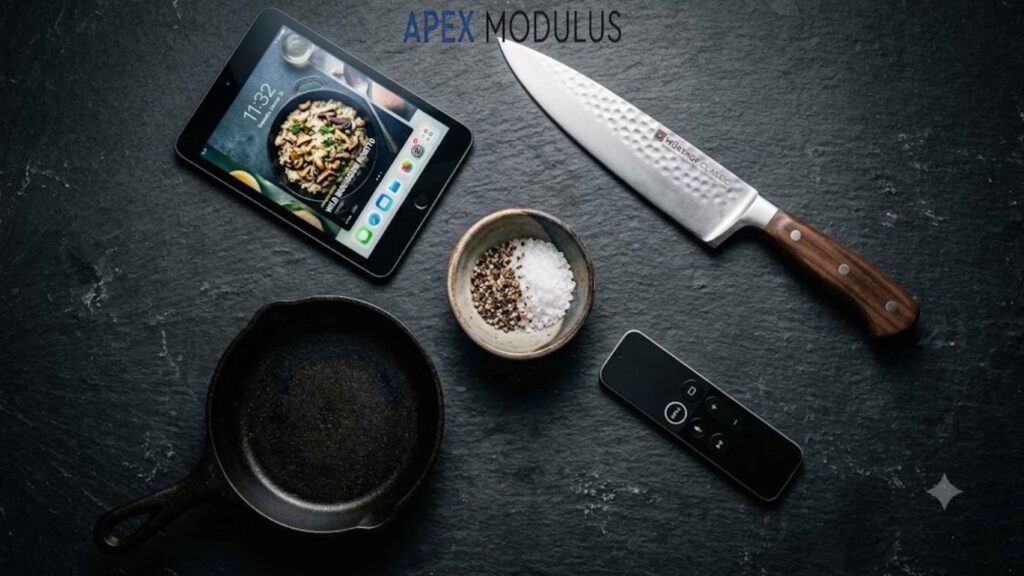
This is the part everyone actually comes here for: real life examples you can picture immediately. Instead of dumping every possible object into one long list, here they’re grouped by category, so it’s easier to find the comparison that actually matches what you’re picturing.
Related guide, How Long Is 7 Inches? 15 Everyday Objects.
Kitchen & Cooking

Kitchens are full of standardized sizes, which makes them a goldmine for 8-inch comparisons.
- 8-inch chef’s knife blade — This is one of the most common blade lengths sold in the U.S. If you’ve ever shopped for a chef’s knife, you’ve almost certainly seen an 8-inch option front and center. It’s the sweet spot between control and cutting power, which is exactly why professional kitchens lean on it so heavily.
- 8-inch cake pan / baking pan — Round cake pans commonly come in an 8-inch diameter, and it’s one of the most requested sizes in home baking. If you’ve ever made a layer cake from a box mix, there’s a decent chance your baking pan was this exact size.
- Personal pan pizza diameter — Single-serving pizzas, the kind you’d order for lunch, typically measure close to 8 inches across. Next time you order a personal pan pizza, you’re basically looking at an edible measuring guide.
- Small skillet — An 8-inch skillet is a labeled standard size at pretty much every cookware retailer. It’s the go-to pan for a couple of eggs or a small portion of sautéed vegetables, and it’s one of the most reached-for pieces of kitchen utensils in a typical home.
Office & School Supplies
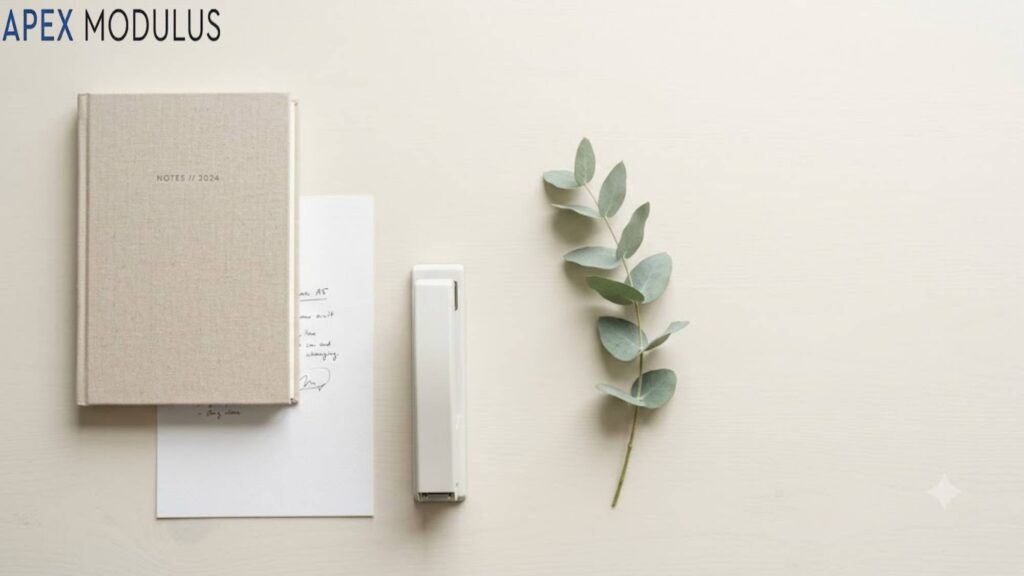
- Standard sheet of printer paper (width) — A letter-size sheet of paper measures 8.5 inches wide, not a clean 8. That extra half-inch matters if you’re trying to be precise, but visually, it’s close enough that most people wouldn’t notice the difference at a glance.
- Compact notebook height — Many compact notebook styles, including popular composition and hardcover journals, run close to 8 inches tall. Not every brand matches exactly, so treat this one as approximate rather than universal.
- Desk stapler length — A lot of standard desk staplers measure right around 8 inches from front to back. It’s not a size most people think about, but once you measure one, you’ll notice how consistent it is across brands.
Tech & Gadgets

- iPad Mini screen diagonal — Apple’s compact tablet has a screen that measures 8.3 inches diagonally, making it one of the more precise, verifiable tech comparisons on this list. If you own one or have seen one in a store, you already know exactly what 8 inches looks like.
- TV remote control — A typical TV remote for a smart TV or standard television set runs somewhere close to 8 inches long, depending on the brand. It’s one of those household devices everyone owns, which makes it an easy mental reference. Next time the remote control is sitting on your coffee table, you’re basically looking at your measurement guide.
Personal & Grooming

- Long bob (lob) haircut length — Hair grown out to shoulder length commonly measures close to 8 inches from certain points on the head, which is part of why this length is such a popular styling benchmark at salons.
- Salon cutting comb — Many professional cutting combs used in hairdressing measure between 7 and 8 inches long. If you’ve ever sat in a salon chair, the comb in the stylist’s hand was probably close to this exact object length.
Tools & Hardware
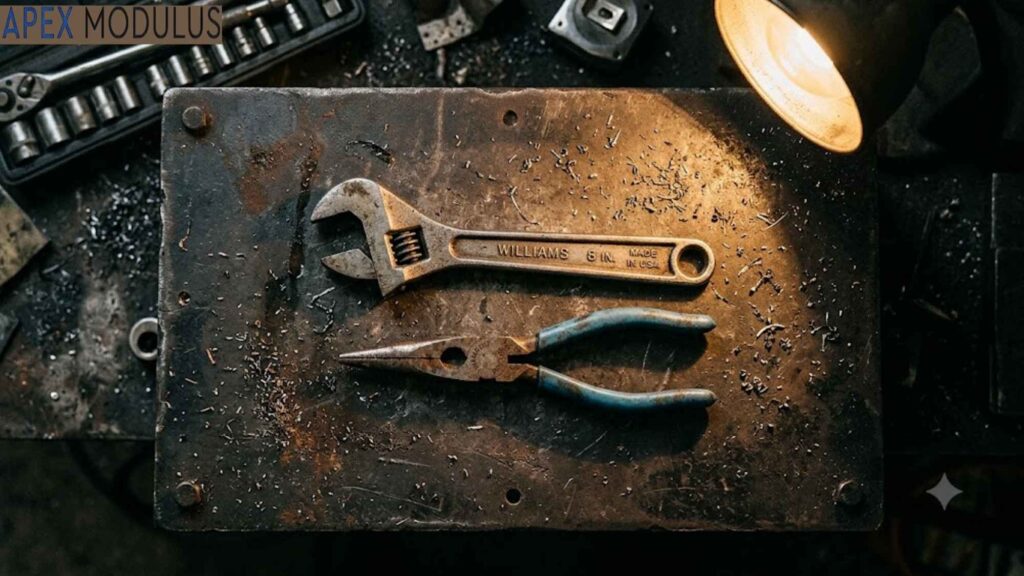
- 8-inch adjustable wrench — This is a genuinely standardized tool size, labeled and sold as-is at hardware stores everywhere. It’s a workhorse size, big enough for real leverage but still small enough to fit in a toolbox without a fight.
- Needle-nose pliers — Many standard needle-nose pliers models measure close to 8 inches total length, making them another reliable, checkable size reference for anyone picturing this measurement through a toolbox lens.
A quick honesty check before we move on: you’ll find plenty of blog posts claiming things like envelopes, picture frames, or desk organizers are “exactly 8 inches.” In reality, those items come in dozens of different sizes depending on the brand, so calling them 8 inches is more of a guess than a fact.
This guide sticks to common dimensions that are actually standardized, because a measurement guide built on shaky comparisons isn’t much of a guide at all.
Check out, Pokémon Card Dimensions: The Complete Size Guide
8 Inches vs. Nearby Sizes
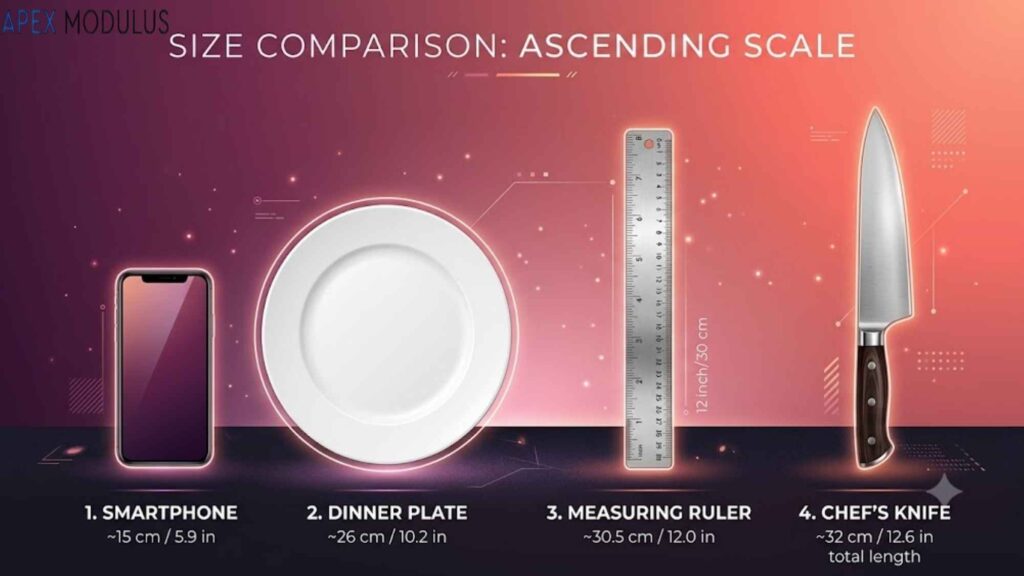
Sometimes the best way to understand a measurement isn’t in isolation. It’s in length comparison against its neighbors. Here’s how 8 inches stacks up against the sizes people most often confuse it with.
| Length | Relatable Object |
|---|---|
| 6 inches | A standard smartphone (most modern phones) |
| 8 inches | A chef’s knife blade or 8-inch cake pan |
| 10 inches | A standard dinner plate |
| 12 inches (1 ft) | A standard school ruler |
Notice the jump from 8 to 10 inches doesn’t sound dramatic on paper, but visually, it’s the difference between a small skillet and a full dinner plate. Size comparison like this helps a lot when you’re trying to picture something you can’t physically hold, like an online furniture listing or a shipping box dimension.
How to Measure 8 Inches Without a Ruler or Tape Measure
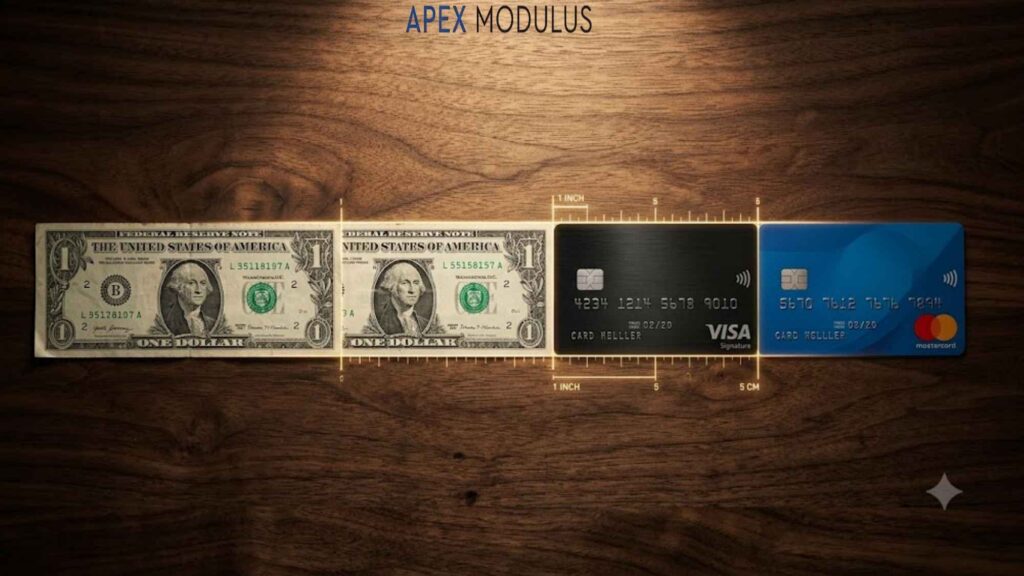
You don’t always have measuring tools handy, and that’s fine. Here are a few reliable measuring trick options that get you impressively close.
Using Your Hand Span
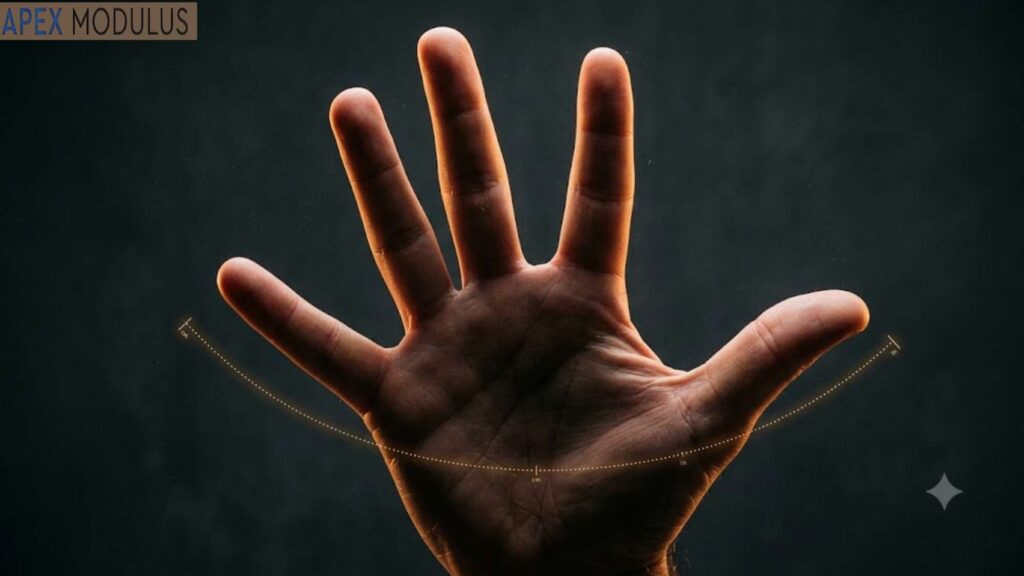
As covered earlier, stretch your thumb to pinky as wide as possible. For most adults, that lands close to 8 inches. This works because your hand is, quite literally, always with you, making it the single most convenient tool for natural measurement and body measurement on the fly.
Stacking Known Objects
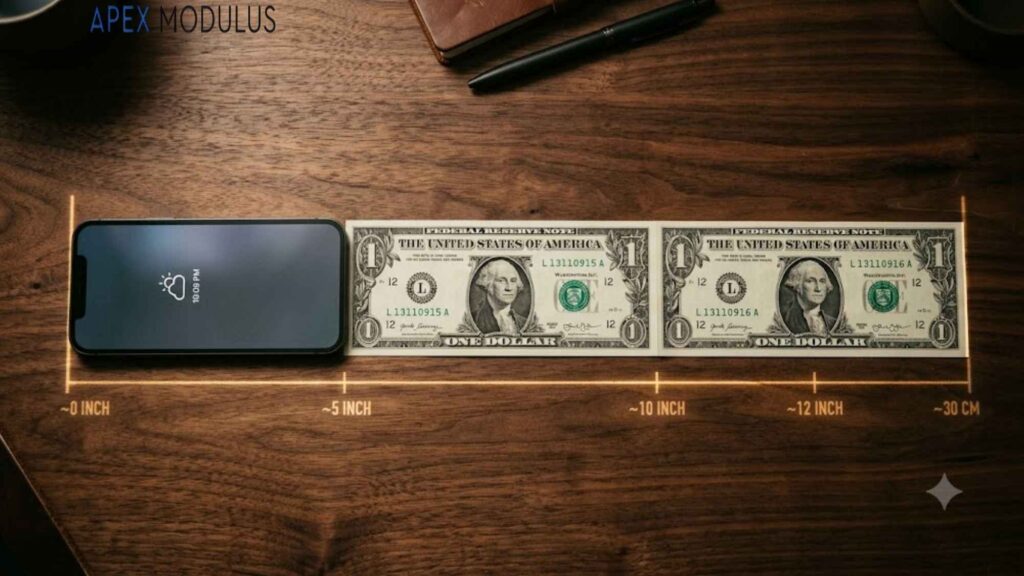
Combine a couple of items with known lengths. Two dollar bills laid end to end get you close, or lay a standard smartphone down and add roughly two extra inches, about the width of two fingers, to reach 8 inches total.
Using a Credit Card as a Reference

A standard credit or debit card measures 3.37 inches long. Line up two card lengths and you’re at 6.74 inches. Add a bit more, roughly a third of another card, and you’ll land right around 8 inches. It’s one of the more precise visual measurement tricks available, mostly because credit cards are manufactured to an exact, unchanging size worldwide.
Common Mistakes When Estimating 8 Inches
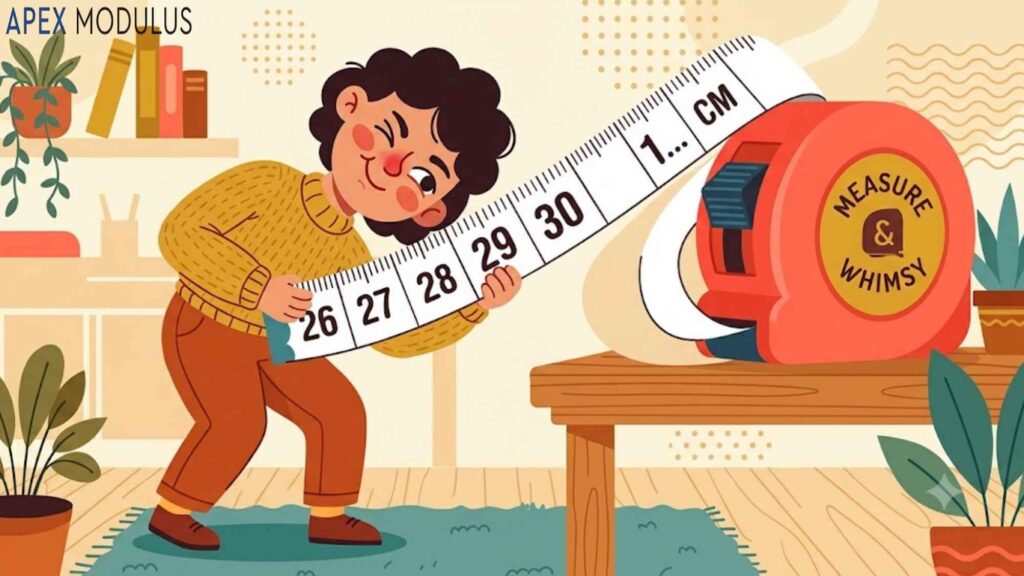
A few habits trip people up when they’re trying to eyeball this measurement. Watch out for these.
- Confusing diagonal with straight-line length. Screen sizes, like the iPad Mini’s 8.3-inch measurement, are almost always measured diagonally, corner to corner. That’s a very different number than the screen’s actual width or height.
- Assuming labeled paper or frame sizes mean an exact width. An “8×10” picture frame refers to the photo it holds, not necessarily an 8-inch measurement on every side or edge of the frame itself.
- Relying on hand span without adjusting for your own hand. Since hand size varies so much between individuals, using someone else’s “8 inches equals my hand span” claim can throw your estimate off by an inch or more in either direction.
Why 8 Inches Shows Up So Often in Daily Life
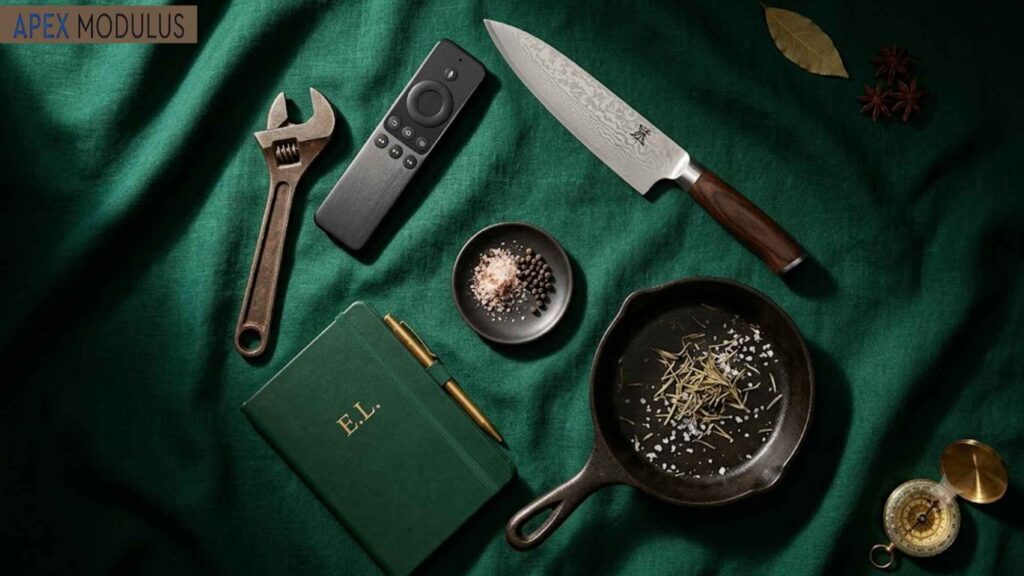
It’s not a coincidence that this measurement pops up in so many household items and daily items. Manufacturers tend to gravitate toward certain sizes because they balance usability with practicality. A knife blade that’s 8 inches is long enough to slice through a large vegetable in one pass, but short enough to control with precision.
A skillet that’s 8 inches fits comfortably on most stovetops while still holding a real portion of food. Even hair length trends settle around this mark because it hits a sweet spot between “short and manageable” and “long enough to style.”
In other words, 8 inches isn’t an arbitrary number. It’s a genuinely functional length that keeps reappearing across totally unrelated industries, from cookware to tech to tools, simply because it works.
Final Thoughts
At this point, you’ve got a full length guide to 8 inches from every angle: the exact metric conversion, real body-based comparisons, categorized practical examples, a size comparison against nearby measurements, and a handful of no-tool tricks for measuring on the fly.
Whether you’re shopping online, following a recipe, or just satisfying your own curiosity, you now have a genuinely reliable mental picture of what 8 inches looks like.
Next time you come across this measurement, you won’t need to picture a vague ruler in your head. You’ll think of a chef’s knife, an iPad Mini, or your own hand span stretched wide, and you’ll know exactly what you’re looking at.
Helpful guide, How Long Is 10 Inches? 15 Everyday Objects
Frequently Asked Questions About 8 Inches
Is 8 inches the same as 20 cm? Not quite, though it’s close. The precise conversion is 20.32 cm, not an even 20. That 0.32 cm difference is small enough to ignore for casual comparisons, but if you’re working on anything that requires exact measurements, like a sewing pattern or a tightly-fitted shipping box, round up to the full figure instead of rounding down.
How many centimeters is 8 inches? 8 inches equals 20.32 centimeters, or 203.2 millimeters if you need the more granular unit. Both numbers come from the same fixed conversion rate: one inch always equals exactly 2.54 cm, no matter what you’re measuring.
What household item is closest to 8 inches? A small skillet or an 8-inch chef’s knife blade are two of the most reliable, standardized comparisons. Unlike vaguer items such as envelopes or picture frames, these have manufacturer-labeled sizes you can actually verify, which makes them far more trustworthy practical references than guesswork.
Can I use my hand to measure 8 inches accurately? You can get impressively close, but not perfectly precise. The average adult hand span lands somewhere between 7 and 9 inches, so unless you’ve measured your own hand against a real ruler first, treat this method as a helpful estimate length shortcut rather than an exact tool.
Why do so many kitchen tools come in 8-inch sizes? Manufacturers settle on sizes that balance control and capability. An 8-inch blade or pan is large enough to handle a real task, whether that’s slicing a vegetable or cooking a proper portion of food, while still staying compact enough to store and maneuver comfortably. It’s less about tradition and more about function.
The Bottom Line
Understanding how long 8 inches actually is comes down to connecting an abstract number to something tangible. Once you’ve got a couple of go-to comparisons in your back pocket, whether that’s your own hand span, a chef’s knife, or a familiar tech gadget, you’ll never have to squint at a measurement listing and wonder what it means again. That’s really the whole point of a good size guide: turning numbers into something you can actually see.
Explore this, Monster Can Dimensions: Size Guide for Every Variant

Hi, I’m Emma Davis! As the Measurement Category Admin here at Apex Modulus, I oversee our standards, data integrity, and category guidelines to make sure everything stays accurate and seamlessly organized. Whether you need help navigating measurement specs or have questions about category standards, I’m here to keep things running smoothly.