

Numbers on a page rarely mean much until you tie them to something you can picture. Tell someone a room is “100 feet long,” and most people just nod without really seeing it. Tell them it’s about the length of 10 kayaks lined up bow to stern, and suddenly the number has a shape.
This guide breaks down the 100-foot distance using things you’ve probably already stood next to: buildings, buses, sports courts, even your own footsteps. By the end, you won’t just know that 100 feet equals 33.3 yards — you’ll actually feel how long that is.
How Long Is 100 Feet, Exactly?
Let’s start with the plain numbers before getting into comparisons. 100 feet is a fixed unit of length equal to:
- 1,200 inches
- 33.3 yards (33 yards, 1 foot)
- 30.48 meters
- 0.019 miles
So when someone asks “how long is 100 feet,” the short answer is: it’s a third of a football field’s playing area, or roughly the height of a 10-story office building. Neither of those examples means much on their own, though — that’s why the rest of this article exists.
One more useful way to frame it: a 100-foot length is long enough that you can’t comfortably shout a normal conversation across it, but short enough that you could sprint it in under 15 seconds. It sits right in that awkward middle zone — too big to eyeball accurately, too small to think of in “miles” terms.
Read this, Pokémon Card Dimensions: The Complete Size Guide
100 Feet in Numbers: A Quick Conversion Table
Before diving into real-world comparisons, here’s a 100-foot measurement reference table you can bookmark.
| Unit | Equivalent to 100 Feet |
|---|---|
| Inches | 1,200 in |
| Yards | 33.33 yd |
| Meters | 30.48 m |
| Centimeters | 3,048 cm |
| Miles | 0.0189 mi |
| Kilometers | 0.0305 km |
100 feet in meters comes out to 30.48 — a figure worth memorizing if you ever need to convert on the fly, since most of the world outside the U.S. measures distance in the metric system.
The Fastest Way to Estimate 100 Feet on the Spot
If you don’t have a tape measure handy, your own body is a surprisingly reliable tool for spatial estimation. The average adult stride is close to 2.5 feet. That means walking heel-to-toe in a straight line, it takes roughly 40 human paces to cover 100 feet.
This isn’t a precision method — someone who’s 6’4″ will cover more ground per step than someone who’s 5’2″ — but it’s accurate enough for quick, practical estimates: figuring out if a couch will fit through a hallway, or whether your yard has enough room for a badminton net.
Why 100 Feet Is So Hard to Visualize
Here’s something most articles gloss over: your brain is genuinely bad at judging distances past a certain point, and there’s a real reason for it.
Human depth perception relies heavily on binocular vision — the slight difference between what your left and right eye see — but that system loses most of its usefulness beyond about 20 to 30 feet.
Past that range, your brain switches to indirect cues: how big something looks compared to known objects nearby, how much haze or atmospheric blur surrounds it, and how objects overlap each other in your field of view.
At 100 feet, none of those cues are especially reliable. That’s why open spaces like parking lots, fields, and warehouses trick people so often. There’s nothing nearby to compare the distance to, so your brain essentially guesses — and it usually guesses short.
A hundred feet without a reference point is one of the easiest distances for the human eye to underestimate. Add a person, a car, or a doorway into the scene, and suddenly your brain has something to measure against.
This is exactly why the comparisons below work better than raw numbers. Once you attach 100 feet to something you’ve stood next to before, the guessing stops.
100 Feet in the Sky: Vertical Comparisons

Picturing 100 feet going up is often harder than picturing it going sideways, since we rarely look straight up and judge height accurately. These three examples anchor the vertical version of the 100-foot distance.
A 10-Story Building

Commercial construction has a rough standard: each floor, including the structural slab and ceiling space, averages about 10 feet of height. Stack ten of those floors and you land almost exactly at 100 feet.
A 10-story building is genuinely one of the best mental anchors for this measurement because most people have seen one in a downtown skyline or medical complex.
If you’ve ever looked up at a modest office tower and thought “that’s not even that tall,” you were probably looking at something close to 100 feet — smaller than most people assume a “tall building” should be.
For comparison, here’s how a few common structures stack up in floor count:
| Structure | Approx. Height |
|---|---|
| Single-family house | 15–20 ft |
| 3-story apartment building | 30 ft |
| 10-story office building | ~100 ft |
| 20-story building | ~200 ft |
| Statue of Liberty (base to torch) | 151 ft |
An Aerial Fire Truck Ladder

Fire departments actually classify their aerial apparatus by extended ladder length, and 100-foot aerial ladder trucks are one of the most common categories used in urban firefighting. These trucks are designed to reach the upper floors of mid-rise buildings — conveniently, buildings in that same 8-to-10-story range.
When you see a fire truck’s ladder extended to its maximum reach during a training exercise or an actual rescue, that fully extended arm is frequently right around 100 feet — tall enough to reach a 10-story building’s rooftop with room to spare.
A Wide-Body Jet’s Wingspan

Aircraft wingspans vary a lot by model, but several narrow-body commercial jets fall into a wingspan range close to 100 feet — some older 727-series aircraft, for instance, have wingspans right around 108 feet, tip to tip.
Standing at the tip of one wing and looking across to the other gives passengers a rare, ground-level way to experience hundred feet long as a horizontal span rather than a vertical one — which is part of why airport tarmacs feel so much bigger up close than they look from the terminal window.
100 Feet on Land: Length and Distance Comparisons

Now let’s bring things back down to ground level, where most people actually need to estimate distance.
A Blue Whale, Nose to Tail

The blue whale is the largest animal known to have ever existed — larger than any dinosaur.
While the average adult blue whale measures somewhere between 70 and 90 feet, some of the largest documented specimens have approached or exceeded hundred feet in length, putting the biggest of these marine giants right in the same size class as the 10-story building above.
A quick note on accuracy here, since a lot of comparison articles get sloppy with this: blue whale size varies significantly by individual, sex, and population (Southern Hemisphere blue whales tend to run larger than Northern Hemisphere ones). So “100 feet” represents the upper extreme of whale length, not a typical adult.
A Mature Eastern Cottonwood Tree

Eastern cottonwoods are among the fastest-growing, tallest hardwood trees native to North America. Mature specimens regularly reach 80 to 100 feet, with some exceptional trees growing even taller in ideal river-bottom conditions.
If you’ve ever stood at the base of a full-grown cottonwood along a riverbank and had to tilt your head all the way back to see the crown, you’ve experienced 100 feet the way it looks when nature builds it instead of construction crews.
Two City Buses, Bumper to Bumper

A standard bus used for city transit typically runs 35 to 40 feet long. Two of them, parked nose to tail with a small gap between, land close to that 100-foot mark — a comparison that works well in urban settings where buses are a constant visual reference.
(Worth noting: a full-size school bus is also around 35–40 feet, similar to city transit buses — so roughly three school buses in a row, not five, is what actually gets you to hundred feet. That’s a common error in other comparison guides.)
A Row of Parking Spaces
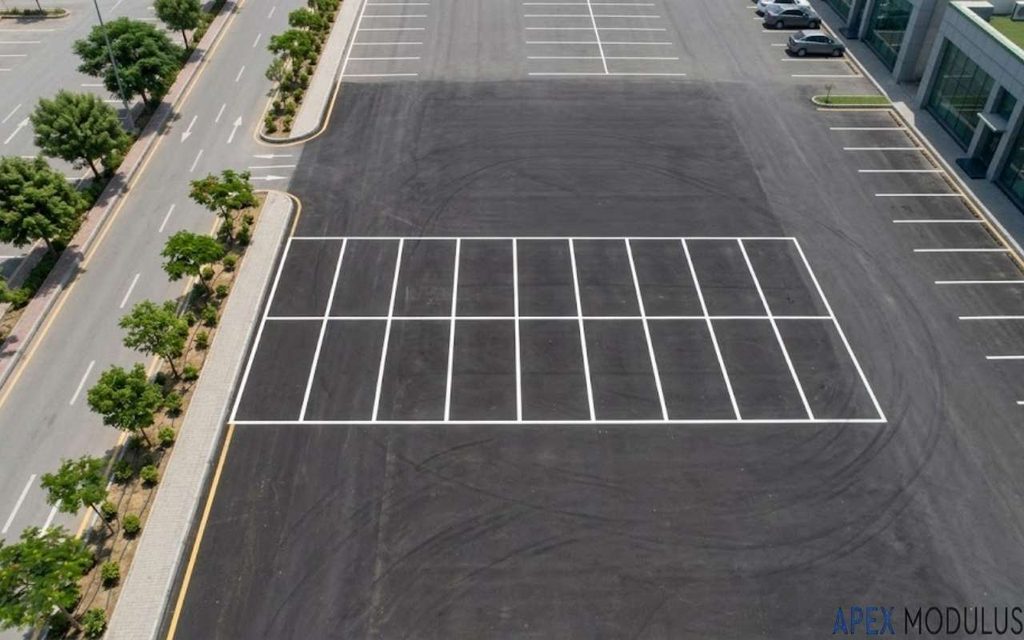
Standard parking spaces in most U.S. commercial lots measure about 9 feet wide. Line up roughly eleven consecutive spaces, and you’ve covered hundred feet of lot — a genuinely useful comparison, since almost everyone has walked the length of a parking lot row at some point.
An 8-Lane Highway

Highway lanes are typically built to a 12-foot width standard. An 8-lane highway — four lanes running each direction — comes out to about 96 feet of pavement, and once you factor in the shoulder and median space, it lands right around the 100-foot mark curb to curb.
Next time you’re stopped at an overpass looking down at a wide interstate, you’re looking at almost exactly 100 feet of roadway beneath you.
100 Feet in Sports: Dimensions You Can Compare
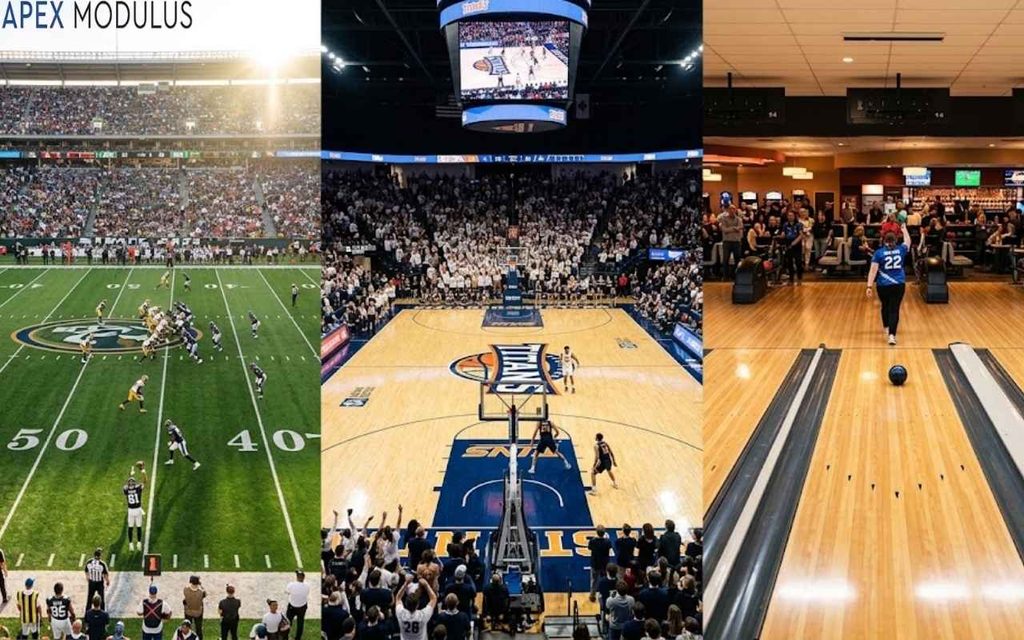
Sports facilities are built to strict, standardized dimensions, which makes them excellent (if occasionally imperfect) reference points for hundred feet in comparison.
Just Short of an NBA Basketball Court
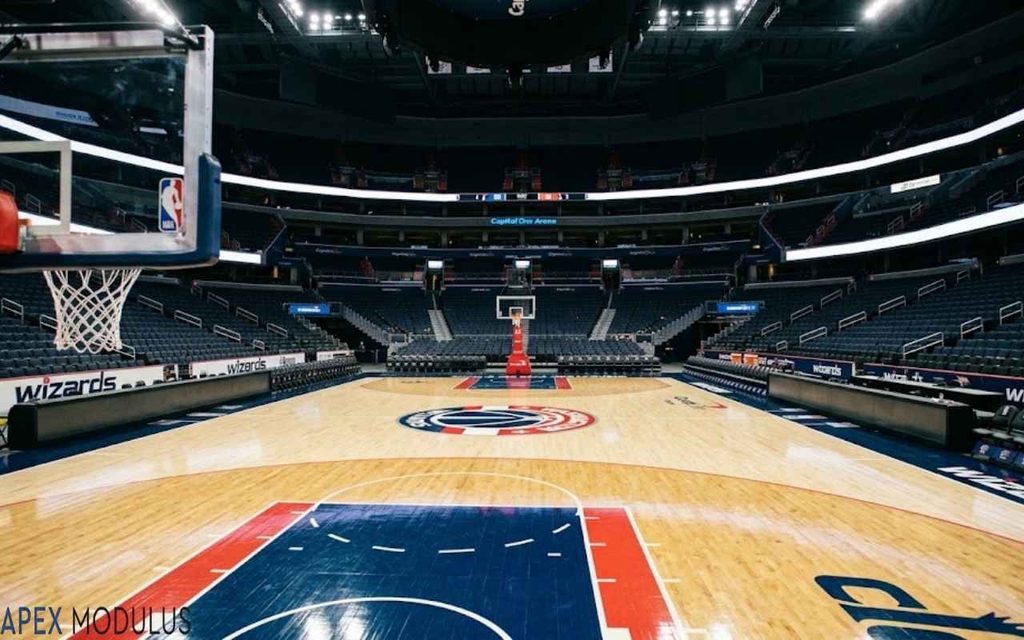
An official NBA basketball court measures 94 feet long by 50 feet wide. That’s close to 100 feet, but it’s important to be accurate here — it’s not exact. Still, if you’ve ever stood at one baseline and looked toward the other, you’ve experienced something within about 6% of a true 100-foot distance. Add roughly the width of one free-throw lane beyond the far baseline, and you’d be right at 100 feet.
A Bowling Lane, Plus the Approach
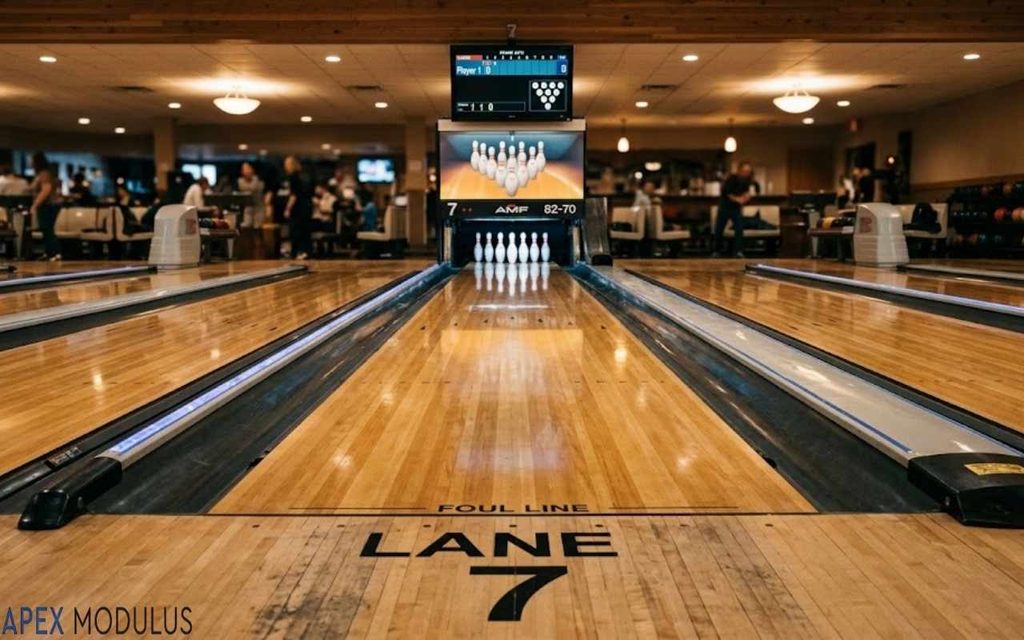
A regulation bowling lane, measured from the foul line to the head pin, is exactly 60 feet — a number set by the United States Bowling Congress (USBC) and used in every certified bowling center.
Add the typical 15-foot approach area behind the foul line, where bowlers take their steps before releasing the ball, and the total working length comes closer to 75 feet.
It’s not a perfect 100-foot match, but it’s a useful anchor: two full bowling lanes laid end to end, approach included, would put you right around 150 feet — meaning about one and a third lanes covers 100 feet.
Discover, How Long Is 10 Inches? 15 Everyday Objects
One-Third of a Football Field
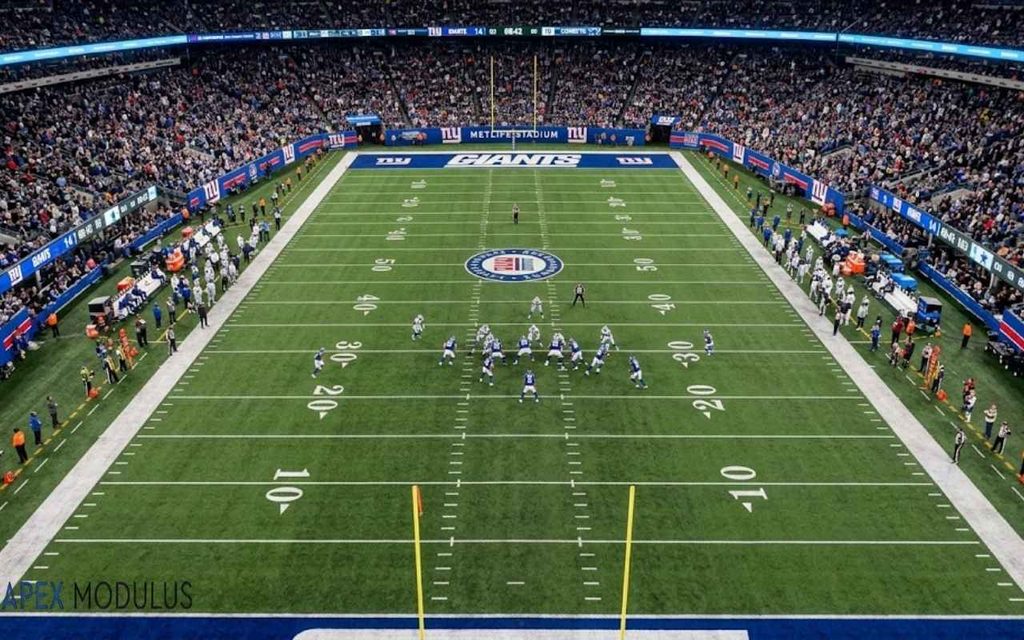
This is one of the cleanest sports comparisons available. An American football field, measured goal line to goal line (excluding the end zones), is exactly 100 yards, or 300 feet. Divide that by three, and you land precisely at hundred feet — the distance from one goal line to the 33-yard line.
If you’ve ever watched a football game and seen a team need to cover “about a third of the field” to reach the end zone, that’s a direct, exact visualization of 100 feet in action.
| Sports Facility | Actual Length | How Close to 100 Feet |
|---|---|---|
| Football field (goal line to goal line) | 300 ft | 100 ft = exactly 1/3 |
| NBA basketball court | 94 ft | Close, not exact |
| Bowling lane (foul line to pins) | 60 ft | Under, not exact |
| Bowling lane + approach | ~75 ft | Closer, still under |
100 Feet You Can Measure With Your Own Body

Not every comparison needs an airplane or a whale. Sometimes the most useful reference is the one you carry with you.
About 40 Adult Paces

As mentioned earlier, the average walking stride covers close to 2.5 feet. Counting 40 human paces in a straight line gets you into the ballpark of hundred feet. This works especially well outdoors — marking off a garden bed, setting up a backyard game, or figuring out if your dog’s leash reaches the property line.
Helpful guide, Monster Can Dimensions: Size Guide for Every Variant
How to Measure 100 Feet Without a Tape Measure
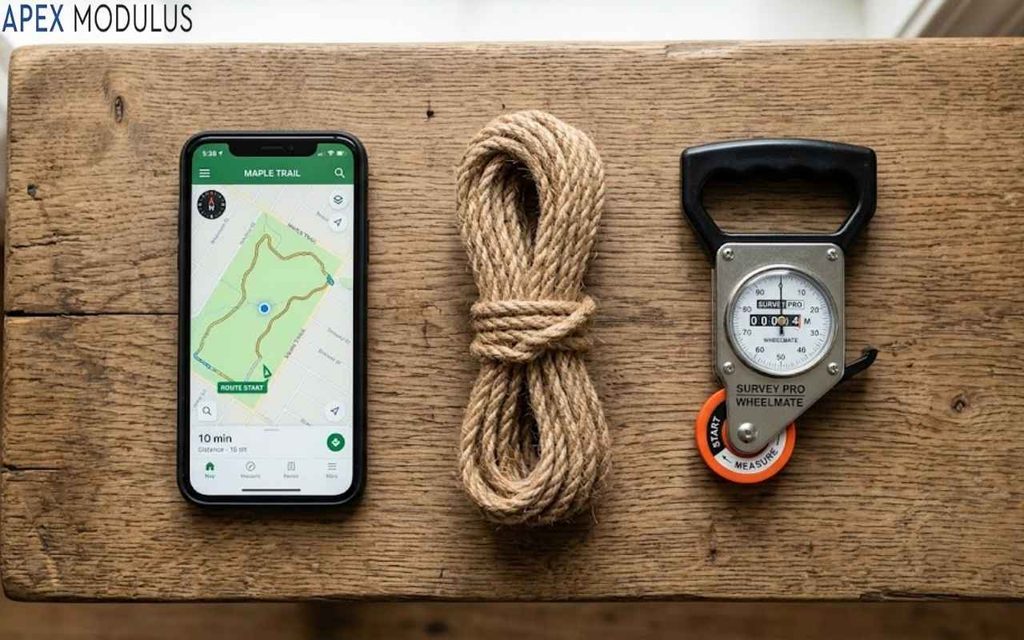
If pacing it out feels too rough, here are a few more reliable DIY methods:
- Use a smartphone GPS app. Many mapping and fitness apps display real-time distance as you walk, accurate to a few feet.
- Use a known object as a ruler. A standard car is about 15 feet long; parking roughly 6–7 cars end to end approximates 100 feet.
- Use rope or paracord of a known length. Pre-measuring a length of rope at home means you can stretch it out and repeat it as a unit later.
- Count floor tiles. Standard tile is often 12 inches square — 100 tiles in a straight line equals 100 feet exactly.
FAQs About 100 Feet
Here are some frequently asked questions about 100 feet:
How many 100-foot lengths make a mile?
A mile is 5,280 feet, so it takes about 52.8 lengths of 100 feet to cover one. Put another way, running a mile means covering that same 100-foot stretch nearly 53 times in a row.
Is 100 feet enough distance for a garden hose to reach across a backyard?
For most residential yards, yes. A 100-foot garden hose is one of the longer standard lengths sold at hardware stores, and it comfortably reaches most points in an average suburban lot from a single outdoor spigot.
What’s the minimum safe distance often associated with 100 feet?
Many local ordinances and safety guidelines use hundred feet as a baseline buffer zone — for things like keeping a safe distance from wildlife, maintaining clearance around fireworks displays, or property setback rules in residential zoning codes. The exact number varies by jurisdiction, so it’s always worth checking local regulations rather than assuming.
Why do so many sports and safety standards land near the 100-foot mark?
It’s not a coincidence tied to any single reason, but hundred feet tends to show up often because it’s a practical middle ground: long enough to create meaningful separation or space, short enough to still be enforceable and easy to mark out with basic tools like a tape measure or marked field lines.
How does 100 feet compare to the length of an average residential street lot?
A typical suburban residential lot often runs somewhere between hundred and 150 feet deep, depending on the neighborhood and zoning. That means a single 100-foot length can roughly span the entire depth of a standard house lot, front to back.
Does 100 feet change at high altitude or in extreme temperatures?
No — a foot is a fixed unit of length, so 100 feet measures the same everywhere on Earth regardless of altitude or temperature. (Precision tools like surveying equipment account for minor material expansion in extreme heat, but for everyday purposes, 100 feet is 100 feet no matter where you are.)
Bringing It All Together
100 feet stops being an abstract number the moment you connect it to something real. It’s the height of a 10-story building, a third of a football field, and about 40 steps of your own walking, or 10 kayaks tied bow to stern along a dock.
Some comparisons — the football field, the floor tiles, the 100-foot fire ladder — hit that number exactly. Others, like the NBA court or the bowling lane, get close enough to be useful without pretending to be perfect matches.
Either way, the next time someone mentions a 100-foot distance, you’ll have more than a dozen ways to actually see it.
Explore this, How Long Is 2 Inches? 15 Everyday Objects
How Well Do You Know 100 Feet? (Quiz)
1. About how many adult paces does it take to cover 100 feet?
- A) About 20 steps
- B) About 40 steps
- C) About 70 steps
- D) About 100 steps
Reveal Answer B) About 40 steps — The average adult stride is close to 2.5 feet, so it takes roughly 40 paces in a straight line to cover 100 feet.
2. Which sports measurement matches 100 feet exactly, not just approximately?
- A) An NBA basketball court
- B) A regulation bowling lane
- C) One-third of a football field’s playing area
- D) An Olympic swimming pool
Reveal Answer C) One-third of a football field’s playing area — The playing field measures exactly 300 feet goal line to goal line, so a third of it lands precisely at 100 feet.
3. Roughly how tall is a standard 10-story commercial building?
- A) 50 feet
- B) 75 feet
- C) 100 feet
- D) 150 feet
Reveal Answer C) 100 feet — Commercial buildings average about 10 feet per floor, so ten stories lands close to 100 feet tall.
4. What is 100 feet equal to in meters?
- A) 10.48 meters
- B) 20.48 meters
- C) 30.48 meters
- D) 40.48 meters
Reveal Answer C) 30.48 meters — One foot equals 0.3048 meters, so 100 feet converts to exactly 30.48 meters.
5. Why do humans tend to misjudge distances like 100 feet?
- A) Binocular depth cues lose effectiveness past 20–30 feet
- B) The human eye can only see up to 50 feet clearly
- C) Distance perception is purely a learned skill with no physical basis
- D) Color vision interferes with distance judgment
Reveal Answer A) Binocular depth cues lose effectiveness past 20–30 feet — Beyond that range, the brain switches to less reliable indirect cues instead of true depth perception.
Related guide, How Long Is 300 Feet? 10 Real-World Things

Hi, I’m Emma Davis! As the Measurement Category Admin here at Apex Modulus, I oversee our standards, data integrity, and category guidelines to make sure everything stays accurate and seamlessly organized. Whether you need help navigating measurement specs or have questions about category standards, I’m here to keep things running smoothly.